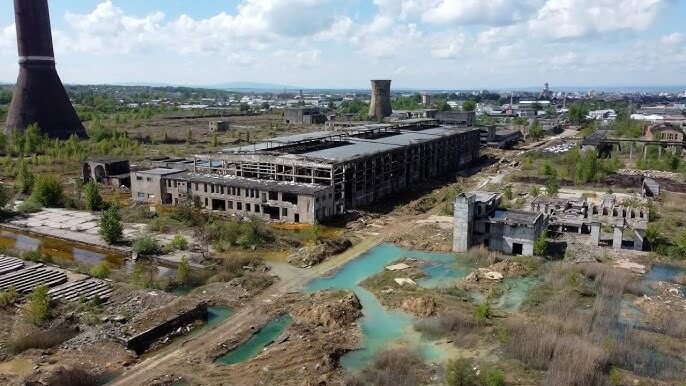
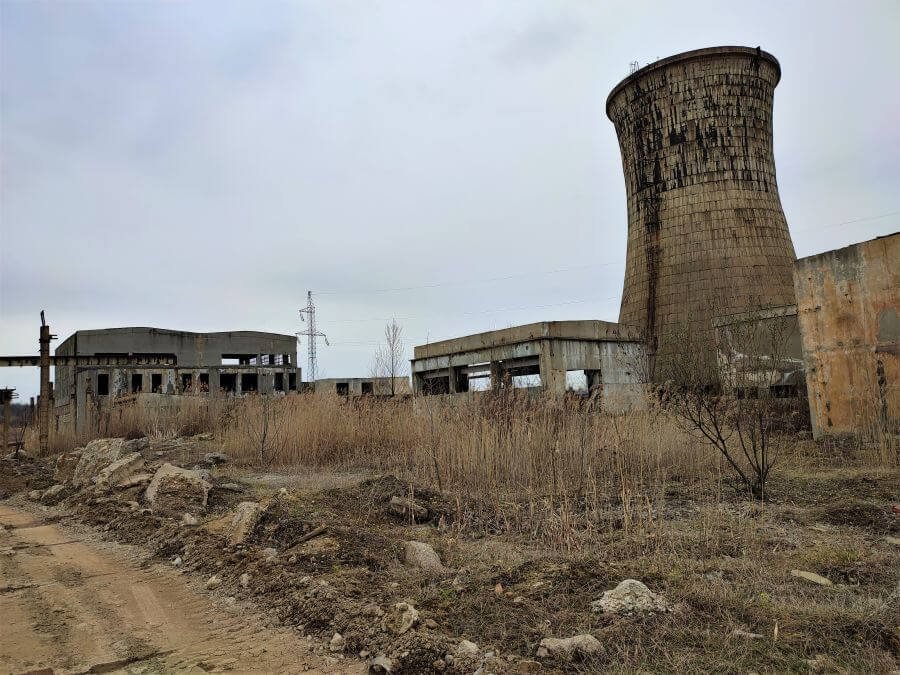
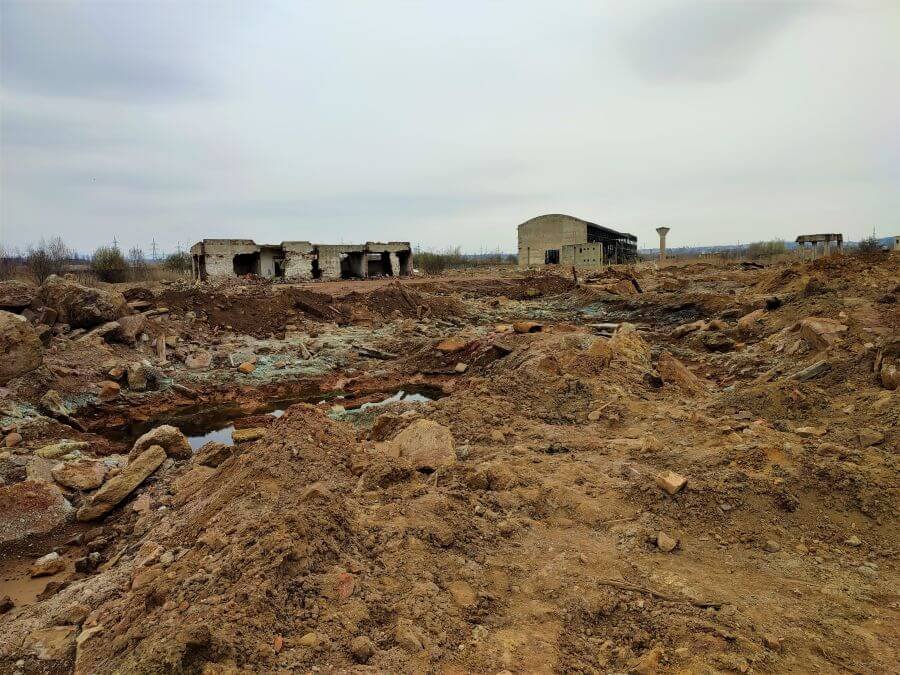
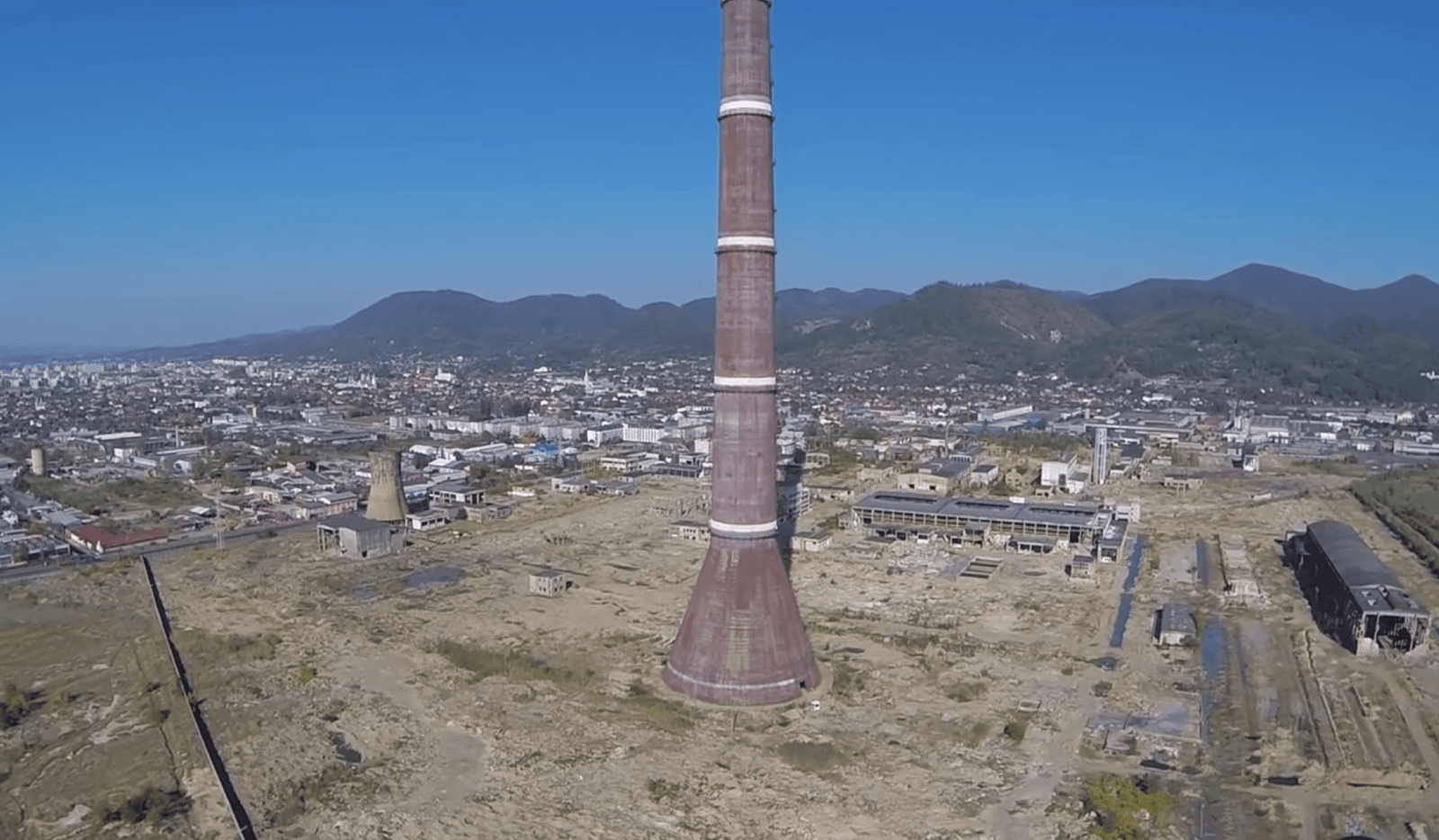
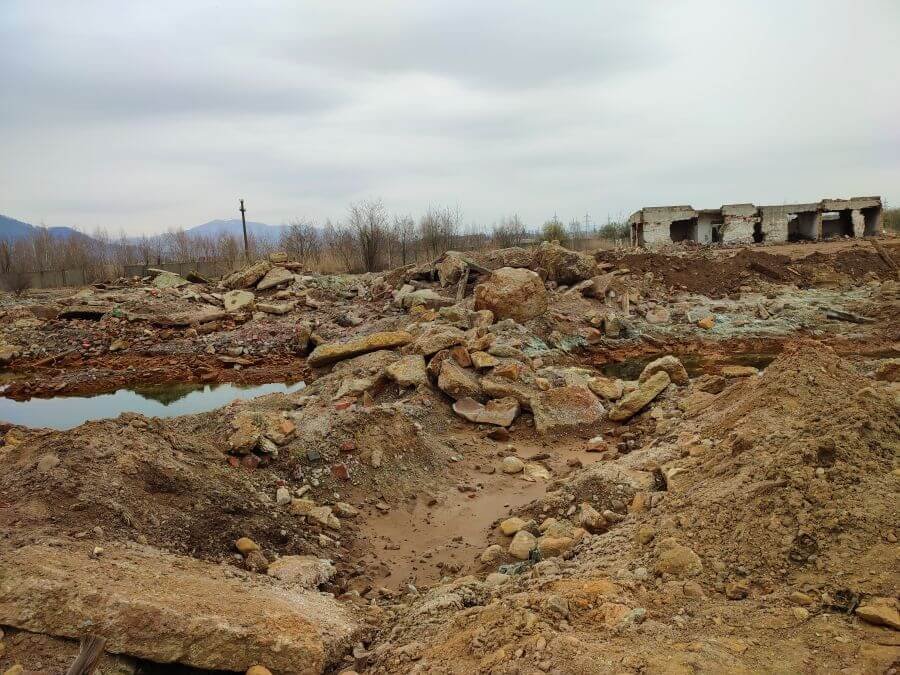
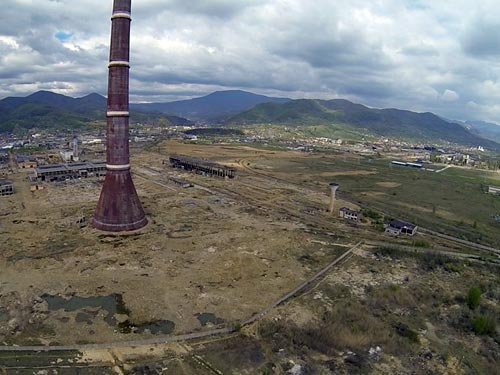
The CUPROM industrial platform in Baia Mare, Romania, spans approximately 55 hectares and represents a legacy contamination site generated by decades of metallurgical and non-ferrous processing activities. The site is characterized by widespread soil and surface contamination with heavy metals, including copper, lead, zinc, and trace metallic elements, distributed across a heterogeneous mixture of materials such as slag, industrial residues, partially processed mineral fractions, and fine-grained sediments.
The material profile across the site is highly variable, with a broad particle size distribution ranging from coarse aggregates to fine particles, as well as significant density variation between material fractions. Heavy metal-bearing components are present in both coarse and fine fractions, including residual material that was historically processed but not fully recovered due to technological limitations. In many zones, material stratification and compaction further complicate processing, requiring adaptive handling depending on local conditions.
Conventional remediation methods such as excavation, stabilization, or chemical treatment are not optimized for such heterogeneous material systems. These approaches typically focus on containment or neutralization of contaminants, without addressing the recovery of valuable metal fractions, while involving high operational costs, complex logistics, and long-term environmental management requirements.
EcoGravity addresses these constraints through a modular, mobile gravity-based processing system designed for on-site deployment. The process integrates mechanical screening, sequential size classification, and controlled hydraulic flow to enable density-based separation of material streams. Coarse and fine fractions are processed in stages, allowing the isolation of heavier, metal-bearing particles from lighter inert material.
Fine particles, which typically present the highest challenge due to their tendency to remain suspended in water, are managed through integrated settling and recirculation systems. This reduces material loss, stabilizes the process, and ensures efficient handling of fines without uncontrolled discharge. Water is operated in a controlled or semi-closed loop, minimizing consumption and environmental impact.
Operationally, the system allows zonal deployment across the full 55-hectare surface, adapting to variations in material composition, moisture content, and contamination levels. This enables progressive processing, where different areas of the site can be treated sequentially based on priority, accessibility, and material characteristics, without requiring fixed infrastructure.
The process enables the recovery of heavy metal concentrates for further processing, while simultaneously reducing contamination levels in the remaining material. This creates a dual-function system combining material recovery and environmental remediation, without the use of chemical reagents.
From a technical standpoint, process efficiency is influenced by particle size distribution, density contrast, degree of metal liberation, and feed consistency. In cases where fine metal recovery is limited, additional concentration stages may be integrated to improve overall yield. Material pre-conditioning may also be required in areas with compacted or highly mixed layers.